Duelversary: Hamilton after the Duel

On July 11, 1804, Alexander Hamilton and Aaron Burr began their fatal duel in Weehawken.  After Hamilton was mortally wounded, he was taken by boat back to New York City, where he passed away the following day.  In a letter to William Coleman (Hamilton’s friend and the editor of the New York Post), Dr. David Hosack, Hamilton’s attending physician, described Hamilton’s moments after the duel.  Dr. Hosack’s full account is available from Founders Online.

Dr. Hosack first described calling out to Hamilton and finding him after he had been shot.  Dr. Hosack determined that the only chance that Hamilton had to survive would be to get onto a boat and go to New York City immediately for treatment.

When called to him, upon his receiving the fatal wound, I found him half sitting on the ground, supported in the arms of Mr. Pendleton. His countenance of death I shall never forget. He had at that instant just strength to say, “This is a mortal wound, Doctor;” when he sunk away, and became to all appearance lifeless. I immediately stripped up his clothes, and soon, alas! ascertained that the direction of the ball must have been through some vital part.* His pulses were not to be felt; his respiration was entirely suspended; and upon laying my hand on his heart, and perceiving no motion there, I considered him as irrecoverably gone. I however observed to Mr. Pendleton, that the only chance for his reviving was immediately to get him upon the water. We therefore lifted him up, and carried him out of the wood, to the margin of the bank, where the bargemen aided us in conveying him into the boat, which immediately put off.

As the party approached the shore, Hamilton gave Dr. Hosack instructions as to how to break the news to his wife, Eliza.

Perceiving that we approached the shore, he said, “Let Mrs. Hamilton be immediately sent for—let the event be gradually broken to her; but give her hopes.” Looking up we saw his friend Mr. Bayard standing on the wharf in great agitation. He had been told by his servant that Gen. Hamilton, Mr. Pendleton, and myself, had crossed the river in a boat together, and too well he conjectured the fatal errand, and foreboded the dreadful result. Perceiving, as we came nearer, that Mr. Pendleton and myself only sat up in the stern sheets, he clasped his hands together in the most violent apprehension; but when I called to him to have a cot prepared, and he at the same moment saw his poor friend lying in the bottom of the boat, he threw up his eyes and burst into a flood of tears and lamentation. Hamilton alone appeared tranquil and composed. We then conveyed him as tenderly as possible up to the house. The distresses of this amiable family were such that till the first shock was abated, they were scarcely able to summon fortitude enough to yield sufficient assistance to their dying friend.

In his last hours, Hamilton spent time with his wife and children, and expressed his anxiety for their future and their grief.

During the night, he had some imperfect sleep; but the succeeding morning his symptoms were aggravated, attended however with a diminution of pain. His mind retained all its usual strength and composure. The great source of his anxiety seemed to be in his sympathy with his half distracted wife and children. He spoke to me frequently of them—“My beloved wife and children,” were always his expressions. But his fortitude triumphed over his situation, dreadful as it was; once, indeed, at the sight of his children brought to the bed-side together, seven in number, his utterance forsook him; he opened his eyes, gave them one look, and closed them again, till they were taken away. As a proof of his extraordinary composure of mind, let me add, that he alone could calm the frantic grief of their mother. “Remember, my Eliza, you are a Christian,” were the expressions with which he frequently, with a firm voice, but in pathetic and impressive manner, addressed her. His words, and the tone in which they were uttered, will never be effaced from my memory. At about two o’clock, as the public well knows, he expired.

Incorrupta fides—nudaque veritas

Quando ullum invenient parem?

Multis ille quidem flebilis occidit.

The powerful Latin phrase Dr. Hosack quoted in the letter is translated below:

“When will incorruptible Faith and naked Truth

Find another his equal?

He has died wept by many.”

Daniel Webster’s Tribute to Alexander Hamilton

The below excerpt from The Beauties of the Hon. Daniel Webster, published in 1839, captures some of Daniel Webster’s legendary respect for Alexander Hamilton and his sense

“How can I stand here to speak of the Constitution of the United States, of the wisdom of its provisions, of the difficulties attending its adoption, of the evils from which it rescued the country, and of the prosperity and power to which it has raised it, and yet pay no tribute to those who were highly instrumental in accomplishing the work?  While we are here to rejoice, that it yet stands firm and strong; while we congratulate one another that we live under its benign influence, and cherish hopes of its long duration; we cannot forget who they were, that in the day of our national infancy, in the times of despondency and despair, mainly assisted to work out our deliverance.  I should feel that I disregarded the strong recollections which the occasion presses upon us, that I was not true to gratitude, nor true to patriotism, nor true to the living or the dead, not true to your feelings or my own, if I should forbear to make mention of ALEXANDER HAMILTON.”

 Daniel Webster Desk
Image from http://www.senate.gov/artandhistory/art/special/Desks/hdetail.cfm?id=5

In 1831, Webster gave a speech in New York, later quoted in Bartleby’s regarding Hamilton’s contributions to the financial system.

He smote the rock of the national resources, and abundant streams of revenue gushed forth. He touched the dead corpse of the Public Credit, and it sprung upon its feet. The fabled birth of Minerva, from the brain of Jove, was hardly more sudden or more perfect than the financial system of the United States, as it burst forth from the conceptions of Alexander Hamilton.

Hamilton vs. Jackson on Finance: why we should #SaveHamilton and #BumpJackson

After the announcement on Wednesday about the Treasury Department’s decision to replace Alexander Hamilton with a woman as the face of the $10 bill, while leaving Andrew Jackson on the $20, I thought it would be appropriate to briefly compare these men’s respective legacies in terms of the financial system.

As the first Secretary of Treasury, Hamilton was the architect of creating a national financial system and establishing the constitutionality of a national bank.  Hamilton faced an uphill battle, with ardent opposition from Jefferson and Madison, and a lukewarm reaction from President Washington.  However, he cajoled, persuaded, and politicked in order to birth the new financial system.

Elizabeth Hamilton described Hamilton’s commitment to the Bank in a quote to a journalist years after Hamilton’s death, as quoted by Michael Newton:

“He made your Government! He made your Bank. I sat up all night with him to help him do it. Jefferson thought we ought not to have a Bank, and President Washington thought so. But my husband said, ‘We must have a Bank.’ I sat up all night, copied out his writing, and the next morning he carried it to President Washington, and we had a Bank.

Hamilton believed that a national bank would help establish public credit and place the new nation on the solid footing that would be necessary to secure its future.

In a 1781 letter to Robert Morris, Hamilton wrote:

The tendency of a national bank is to increase public and private credit. The former gives power to the state for the protection of its rights and interests, and the latter facilitates and extends the operations of commerce among individuals. Industry is increased, commodities are multiplied, agriculture and manufactures flourish, and herein consist the true wealth and prosperity of a state.

He clung to this opinion despite significant opposition, and established the federal debt and the national bank through sheer force of will.  The financial system that Hamilton set up during his tenure as Secretary of Treasury outlasted him and left a legacy that shaped institutions for years to come.

As Albert Gallatin, Jefferson’s Secretary of Treasury noted in a letter to Hamilton’s son:

“I have found the most perfect system ever formed. Any change that should be made in it would injure it. Hamilton made no blunders, committed no frauds. He did nothing wrong.”

In contrast, Jackson despised the idea of a central bank, and believed the very existence of a National Bank was contrary to his narrow interpretation of constitutional powers.  Jackson relished the idea of being able to destroy the bank by vetoing its charter, and engaged in the famous “Bank Wars,” taking on Henry Clay and Nicholas Biddle (then-president of the National Bank)

In November 1829, Jackson wrote to Nicholas Biddle:

“I find it right to be perfectly frank with you.  I do not think that the power of Congress extends to charter a bank out of the ten-mile square.  I do not dislike your bank any more than all banks.  But ever since I read the history of the “South Sea Bubble” I have been afraid of banks.”

In his Bank Veto Message of 1832, Jackson stated:

The present corporate body, denominated the president, directors, and company of the Bank of the United States, will have existed at the time this act is intended to take effect twenty years. It enjoys an exclusive privilege of banking under the authority of the General Government, a monopoly of its favor and support, and, as a necessary consequence, almost a monopoly of the foreign and domestic exchange. The powers, privileges, and favors bestowed upon it in the original charter, by increasing the value of the stock far above its par value, operated as a gratuity of many millions to the stockholders….

This pro-Jackson cartoon about Jackson’s destruction of the central bank is actually entitled “the Downfall of Mother Bank.”

The downfall of Mother Bank
Image from the Library of Congress, http://www.loc.gov/pictures/resource/cph.3a04717/

In light of Hamilton and Jackson’s respective impact and beliefs on the financial system, replacing Hamilton while leaving Jackson on currency is highly problematic.  Removing the spiritual father of the Treasury Department while continuing to allow one of its sworn enemies to retain a place of honor shows a blatant disregard for history.

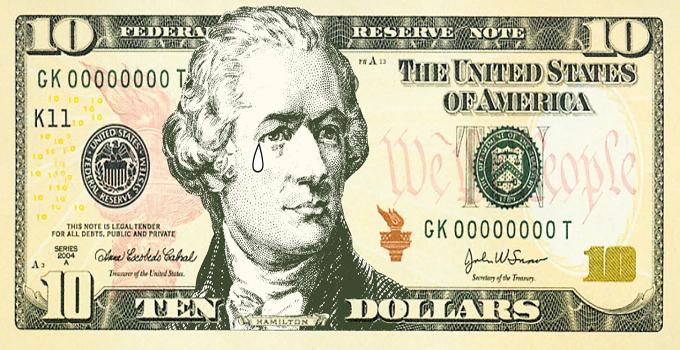
Hamil-ten No More?

Yesterday, Jack Lew announced that the $10 bill would be undergoing a complete redesign to feature a woman on the currency.

The Fact Sheet released by the Treasury Department states that: “Secretary Lew has made clear that the image of Alexander Hamilton will remain part of the $10 note.”  However, no specifics about what position Hamilton’s image would have has been released yet.

The Treasury Department website about the New Ten asks for the public to provide them with ideas and feedback and states:

In exercising the responsibility to select currency features and design, Treasury Secretary Jack Lew has made clear that the public’s input is an important and valuable part of the process for the redesign of the $10 note. Treasury wants to hear from the American people and engage in a public dialogue about how we can use the new $10 note to best represent the values of our inclusive democracy. Treasury staff will also seek public comment through other forums including round tables, and open houses. Share your ideas, symbols, designs or any other feedback that can inform the Secretary as he considers options for the $10 redesign.

Chris Matthews of Fortune called Lew’s decision to redesign the $10, rather than removing Andrew Jackson from the $20 “the worst decision Jack Lew has made.”  I believe that it is a fundamental mistake for the Treasury Department to abandon its spiritual father by removing Hamilton from the $10 bill.  Without Hamilton, the Treasury Department and a national currency would not exist.

At the same time, I am fully supportive of the idea of removing Andrew Jackson from the $20 and replacing him with a woman.  Jackson spent his career fighting the idea of paper money and a central banking system.  Even the movement asking for a woman to appear on currency has been focused on putting a woman on the $20, and over 600,000 people (myself included) voted on candidates to replace Jackson on the bill at the website http://www.womenon20s.org/.

Alexander Hamilton is uniquely qualified to retain a prominent place on American currency.  Hamilton fought vigorous opposition from Jefferson and other contemporaries to establish a national bank.  He single-handedly established the economic foundations of the young nation.  Hamilton also made significant, game-changing contributions to the Revolutionary War and had a major role in establishing Constitution and the foundations of our government.

Michael Newton posted several quotes from Hamilton’s contemporaries about his role in developing the foundation of the American financial system, including Daniel Webster’s statement that Hamilton:

“…smote the rock of the national resources, and abundant streams gushed forth. He touched the dead corpse of the public credit, and it sprung to its feet. The fabled birth of Minerva from the brain of Jove was hardly more sudden or more perfect than the financial system of the United States as it burst forth from the conception of Alexander Hamilton.”

Embedded image permalink
Image from the New York Post: http://nypost.com/2015/06/17/woman-to-replace-alexander-hamilton-on-10-bill/

Secretary Lew’s statement made clear that the Treasury Department is seeking public input on the redesign.  If you are passionate about this issue, I urge you to participate in public forums, send comments and letters to Treasury, and use your social media presence to ensure that Hamilton’s image continues to be the face of the $10 bill.

Hamil-Swag: Even More T-Shirts!

Here are some cool new Hamilton-themed t-shirt designs I’ve seen around the internet!  If you’re interested in previously featured t-shirt designs, check out some posts from the archives here and here!

(1) Break All the Twenties: I love this clever design, featuring Hamilton surrounded by ten dollar bills.  This t-shirt was designed by user roanoke, and is available for $24.80 from Red Bubble

Break All The Twenties by roanoke

(2) Election Girls: this shirt is a play on Mean Girls featuring John Adams, Alexander Hamilton, Thomas Jefferson, and James Madison.  The designer’s description states: “The election of 1796 photoshopped onto the Mean Girls Poster.”  The shirt is available for $24.80 from Red Bubble and was created by user .

Election Girls by jadenshop

(3) High Noon at the Hudson: this t-shirt, selling for $9 from Headline Shirts offers an irreverent take on the Hamilton-Burr duel.

Model is wearing a size Medium. He is 6'1".

(4) Let Us Go Ham: Designer vforvery created this shirt, available on Red Bubble for $24.80.  The artist’s description states: “Even the one of the founding fathers has to let loose every once in a while. Alex likes to get wild when he goes out with his BFFLs.”

Alexander Hamilton is a Party Animal by vforvery

(5) “Hamilton is not amused” shirt from Zazzle on sale for $21.95 by user hamiltonislove.

Alexander Hamilton Tshirts

Review of Michael E. Newton’s Alexander Hamilton: The Formative Years

Alexander Hamilton: The Formative Years by Michael E. Newton provides a comprehensive account of Hamilton’s life from 1757 to 1782, including his birth, childhood, education, participation in pre-Revolution politics in New York, and service in the Revolutionary War, both as Washington’s aide-de-camp and as a military leader.

The book takes the reader on a detailed journey through the first half of Hamilton’s life.  While many historians have lifted some accepted details of Hamilton’s life from past biographers, Newton has taken 4 years to exhaustively research both primary sources and the existing historical record and thus has the perspective to compare contradictions in the record and uncover new information.  Newton’s extensive research efforts enable the reader to understand the historiography behind each of the well-known Hamilton legends he covers, and on some occasions, debunks.  During the course of his research, Newton has made several new discoveries, some of which are outlined on his website, including information about Hamilton’s arrival in New York, studies at King’s College, and militia service. Newton’s painstaking devotion to the details of Hamilton’s life is apparent in the extensively footnoted text, and the reader is able to come away with a fresh understanding of Hamilton’s early life.  Newton takes the time to explain his research and discovery process to the reader, making it clear where sources disagree with each other so that the reader can form her own opinion.  Hamilton’s early life was complex, filled with nuances and conflicting motivations that contributed to his later political and personal decisions.  AHTFY lays out these events in a way that provides illumination to the reader on the development of Hamilton’s character.

The book’s synopsis states, in part:

“Despite being orphaned as a young boy and having his birth be “the subject of the most humiliating criticism,” Alexander Hamilton used his intelligence, determination, and charisma to overcome his questionable origins and desperate situation. As a mere child, Hamilton went to work for a West Indian mercantile company. Within a few short years, Hamilton was managing the firm’s St. Croix operations. Gaining the attention of the island’s leading men, Hamilton was sent to mainland North America for an education, where he immediately fell in with the country’s leading patriots. After using his pen to defend the civil liberties of the Americans against British infringements, Hamilton took up arms in the defense of those rights. Earning distinction in the campaign of 1776–77 at the head of an artillery company, Hamilton attracted the attention of General George Washington, who made him his aide-de-camp. Alexander Hamilton was soon writing some of Washington’s most important correspondence, advising the commander-in-chief on crucial military and political matters, carrying out urgent missions, conferring with French allies, negotiating with the British, and helping Washington manage his spy network. As Washington later attested, Hamilton had become his “principal and most confidential aid.” After serving the commander-in-chief for four years, Hamilton was given a field command and led the assault on Redoubt Ten at Yorktown, the critical engagement in the decisive battle of the War for Independence. By the age of just twenty-five, Alexander Hamilton had proven himself to be one of the most intelligent, brave, hard-working, and patriotic Americans.

Alexander Hamilton: The Formative Years tells the dramatic story of how this poor immigrant emerged from obscurity and transformed himself into the most remarkable Founding Father. In riveting detail, Michael E. Newton delivers a fresh and fascinating account of Alexander Hamilton’s origins, youth, and indispensable services during the American Revolution.”

Alexander Hamilton: The Formative Years is being published in June 2015, and can be pre-ordered via Kickstarter.


The Last Will and Testament of Alexander Hamilton

On July 9, 1804, a few days before his fateful duel with Aaron Burr, Alexander Hamilton signed his last will of testament.

In the Name of God Amen! I Alexander Hamilton of the City of New York Counsellor at Law do make this my last Will and Testament as follows. First I appoint John B Church Nicholas Fish and Nathaniel Pendleton of the City aforesaid Esquires to be Executors and Trustees of this my Will and I devise to them their heirs and Assigns, as joint Tenants and not as Tenants in common, All my Estate real and personal whatsoever and wheresoever upon Trust at their discretion to sell and dispose of the same, at such time and times in such manner and upon such terms as they the Survivors and Survivor shall think fit and out of the proceeds to pay all the Debts which I shall owe at the time of my decease, in whole, if the fund shall be sufficient, proportionally, if it shall be insufficient, and the residue, if any there shall be to pay and deliver to my excellent and dear Wife Elizabeth Hamilton.

Hamilton had a long history with each of the individuals he chose as his executors: John Church, Nathaniel Pendleton, and Nicholas Fish.  John Church was the husband of Angelica Schuyler and Hamilton’s brother-in-law.   Nicholas Fish had been Hamilton’s friend since they were teenagers involved in the early part of the Revolution.  Fish even named his son after Hamilton (Hamilton Fish would go on to become Governor of New York and Secretary of State under President Grant).  Virginian Nathaniel Pendleton was a close friend and colleague of Hamilton’s at the New York Bar.  In the 1790s, Pendleton had been named a potential candidate for the position of Secretary of State, but Hamilton feared that he had “been somewhat tainted by the prejudices of Mr. Jefferson and Mr. Madison.”  When Hamilton and Pendleton were both practicing in New York, they became close friends.  Pendleton also served as Hamilton’s second in his duel with Burr, and he helped Hamilton put his affairs in order before the duel.

The second part of Hamilton’s will expressed his concern for the financial situation of his family.  Hamilton was aware that because he had focused his career in the public service, he would not be leaving his wife and children in the best financial footing.

Though if it shall please God to spare my life I may look for a considerable surplus out of my present property—Yet if he should speedily call me to the eternal wor[l]d, a forced sale as is usual may possibly render it insufficient to satisfy my Debts. I pray God that something may remain for the maintenance and education of my dear Wife and Children. But should it on the contrary happen that there is not enough for the payment of my Debts, I entreat my Dear Children, if they or any of them shall ever be able, to make up the Deficiency. I without hesitation commit to their delicacy a wish which is dictated by my own. Though conscious that I have too far sacrificed the interests of my family to public avocations & on this account have the less claim to burthen my Children, yet I trust in their magnanimity to appreciate as they ought this my request. In so unfavourable an event of things, the support of their dear Mother with the most respectful and tender attention is a duty all the sacredness of which they will feel. Probably her own patrimonial resources will preserve her from Indigence. But in all situations they are charged to bear in mind that she has been to them the most devoted and best of mothers. In Testimony whereof I have hereunto subscribed my hand the Ninth day of July in the year of our lord One thousand Eight hundred & four.

Hamilton’s will was part of a series of documents that Hamilton delivered to Nathaniel Pendleton prior to the duel and opened after Hamilton’s death.  In a letter dated July 4, 1804, the same day that Hamilton and Burr sat at the same table for dinner with other former Continental Army officers at Fraunces Tavern, Hamilton thanked Pendleton for helping him finalize his affair before the duel.

I thank you My Dear Sir for your friendly offices in this last critical scene, if such it shall be. Excuse me for having inserted your name as Executor. I fear it may not be in your favor to do much good to my family. But I am sure you will do all the good you can.

The Death of Philip Hamilton

I’ve posted earlier about the November 1801 death of Philip Hamilton in  a duel with George I. Eacker.  Philip’s dramatic death triggered a flurry of highly politicized press coverage.  Federalist newspapers painted Philip as a boyish victim of a seasoned lawyer who was unable to look past a youthful teasing.  In contrast, Republican newspapers claimed that Philip and Price were aggressors and had viciously attacked Eacker and cornered him into a duel, leaving him no choice but to protect his honor.  A detailed account with more complete excerpts of this back-and-forth between rival newspapers was published in 1867 by Historical Magazine and is available via Google ebooks.

11-25-1801

The New York Evening Post’s November 24, 1801 death notice stated:

“This morning, in the 20th year of his age, Philip Hamilton, eldest son of General Hamilton– murdered in a duel–”

“On Friday evening last, young Hamilton and young Price, sitting in the same box with Mr. George I Eacker, began in levity a conversation respecting an oration delivered by the latter in July, and made use of some expressions respecting it, which were overheard by Eacker, who asked Hamilton to step into the lobby; Price followed—here the expression damned rascals was used by Eacker to one of them, and a little scuffle ensued; but they soon adjourned to a public house: an explanation was then demanded, which one of them the official expression was meant for; after a little hesitation, it was declared to be meant for each…”

The Post characterized Philip Hamilton as

“…a young man of most amiable disposition and cultivated mind; much esteemed and affectionately beloved by all who had the pleasure of his acquaintance.”

On November 25, 1801, The New-York Gazette and General Advertiser published a similar account of the proceedings leading up to the duel:

“On the morning of the 14th instant, Mr. Philip Hamilton, eldest son of General Hamilton, in the 20th year of his age, of a wound received in a duel with Capt. George I. Eacker.  Few events have so much interested the public, whether they consider the youth and promising talents of the deceased, the feelings of most affectionate parents, or the false honor to which his life was sacrificed.

The duel was occasioned by some frolicksome and satirical expressions made by Mr. Hamilton and a young Mr. Price, at a Theatre, on the Friday preceding, about an oration of Mr. Eacker’s and in his hearing.  This conduct Mr. Eacker resented in a very intemperate manner, collared Mr. Hamilton, called them damned rascals and villains, and said if he did not hear from them, he would treat them as such.  Challenges were consequently sent to him by both.

Mr. Eacker and Mr. Price met on the Sunday following, and after exchanging four shots without injury to either, the seconds interfered.  On Monday, the fatal duel between Mr. Eacker and Mr. Hamilton took place.  Young Hamilton was shot through the body, on the first discharge, and fell without firing.  He languished until the next morning, and then expired.”

In response to the accounts in the New York Evening post and the New-York Gazette, the Republican American Citizen and General Advertiser, , expressed outrage at the characterization of Philip’s death as “murder” and portrayed Philip and Richard Price as being responsible for the duel.  Some excerpts of this press coverage are included below, and more is available here:

“Immediately preceding the pantomime, the box being full, Messrs. Hamilton and Price, leaving the opposite side of the house, again intruded into the box occupied by Mr. Eacker and his party.  At the moment of their entrance, they commenced a loud conversation, replete with the most sarcastic remarks upon Mr. Eacker.  Their manner was more offensive, if possible than their conversation.  Mr. Eacker himself, thus pointedly the object of contempt and ridicule, and his name being mentioned aloud, could no longer sustain the painful sensation resulting from his situation.”

….

“Mr. Price and the unfortunate Mr. Hamilton, were, we assure the public, the aggressors.  They violently assaulted Mr. Eacker, whose conduct through every stage of the unfortunate affair, was perfectly honorable and exempt from blame.  They commenced the assault upon and challenged Mr. Eacker.

Interestingly, the American Citizen’s coverage does not mention Eacker’s 4th of July oration, although the newspaper had published excerpts of in its July 24, 1801 edition.  Although Hamilton’s name does not appear in the excerpts of Eacker’s speech I have read (I have only read newspaper excerpts and have not seen the entire published speech), Eacker’s criticisms of the Federalist party directly attack Hamilton’s policies.  In the excerpt below, Eacker describes how the Federalists have undermined the principles of the revolution, and how the Washington and Adams administrations damaged these principles.

“We have already seen the sacred principles of our revolution openly assaulted, and its venerable advocates reviled and exposed to public contempt.  The endeavours to undermine the popular attachment to a free government are notorious.  We have seen foreign influence attempting to make us subservient to its projects of hostility and ambition!

“An alliance, offensive and defensive, with the enemy of our greatness, was openly advocated; and the poisonous works of corruption nearly involved our destiny in total ruin!”

In Thomas Jefferson: An Intimate History, Fawn McCay Brodie wrote:

“Philip had gone out of his way to invite a duel, had gone into the duel with no intention of firing, thus inviting a duel or death, all this to defend the honor of his father, a father who had by humiliating confession recently brought agonies to his family and made himself the butt of national ridicule.  Philip could have chosen no way to die that would have brought his parents greater agony and guilt.”

Eacker died within three years of the duel, immediately before Alexander Hamilton’s death in 1804.  Notably, Eacker and Philip Hamilton (and Alexander and Elizabeth Hamilton) are fairly close neighbors in death.  In Walks in Our Churchyards: Old New York, Trinity Parish, John Flavel Mines wrote of Eacker’s death: “Young Eacker died of consumption before three years had passed…and is buried in St. Paul’s Churchyard on the Vesey Street Side.”  Philip Hamilton is buried across the street, at an unknown spot in Trinity Church.  According to Allan Pollock’s 1880 History of Trinity Church and Its Grave Yard, Philip was “interred in this same plot of ground, about ten years before the death of his father.”

Image of Eacker’s Gravestone from http://registers.trinitywallstreet.org/files/history/churchyard/stpaul/history.php?id=70#here


Hamil-Swag: Hamilton Public Fan Art (Updated)

(Apologies for the incomplete post this morning!)

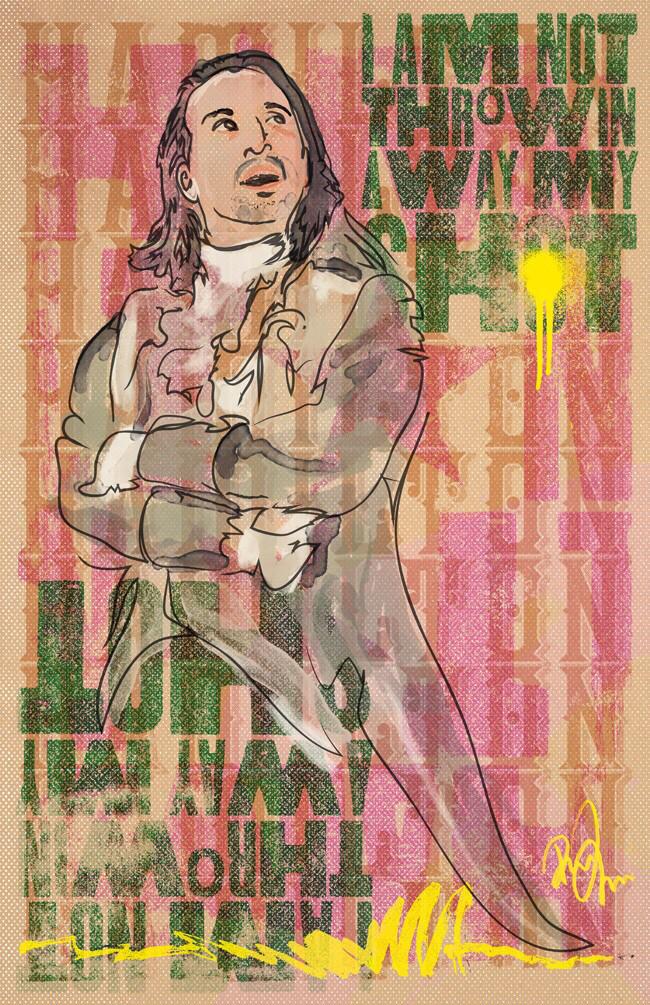
Since the official opening of the Hamilton musical to rave reviews last week, the internet has been providing us with some gems of Hamilton fan art, memes, and gifs inspired by the show.  Here are some of my favorites from what I’ve seen so far!  If you’ve seen (or made) others that I should add to this list, hit me up in the comments section or on Twitter @itshamiltime!

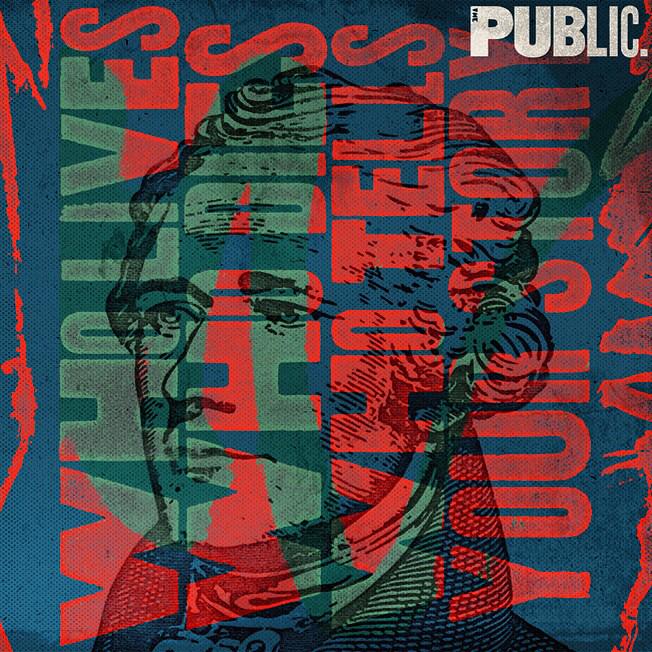
Twitter user @drpeccidesign shared some awesome images, juxtaposing lyrics from the show with images of Hamilton.  These two were my favorite.

Embedded image permalink
https://twitter.com/drpeccidesign/status/566844657464655873
Embedded image permalink
https://twitter.com/drpeccidesign/status/568638128145043456

Last week, Publius-Esquire published this sketch of Thomas Jefferson (Daveed Diggs) and Alexander Hamilton (Lin-Manuel Miranda) from the show.  (They both look too smiley here to be mid-rap battle!)

Sketch from Publius Esquire: http://publius-esquire.tumblr.com/post/111122186915/sketched-thomas-jefferson-daveed-diggs-and

She also did this one of Aaron Burr (Leslie Odom Jr.) and Alexander Hamilton (Lin-Manuel Miranda) back-to-back with duel pistols.  (This makes me wish that I had some artistic ability!)

From Publius-Esquire http://publius-esquire.tumblr.com/post/109950243610/wanted-to-draw-lin-manuel-miranda-and-leslie-odom

On February 18, Twitter user  published this image, juxtaposing lyrics from the show against an unfocused backdrop of Hamilton’s face.

2-27-2015 1-59-30 PM

Of course, a short Hamilton montage is now available from the Public Theater with some highlights from the show!

Tickets to Hamilton on Broadway go on sale March 8th via Ticketmaster!

Hamil-Tunes: Hamilton and Burr’s Pre-Duel Dinner

The week before their fateful/fatal interview in Weehawken, Hamilton and Burr both attended a 4th of July dinner meeting of the Society of the Cincinnati at Fraunces Tavern.  The Society was a group of Revolutionary War officers and Hamilton was president general, succeeding George Washington after his death.  During the dinner, Burr and Hamilton reportedly sat at the very same table!  While Burr seemed silent and serious, Hamilton was in seemingly high spirits and accepted a request to entertain his fellow former officers with a military song.

John Trumbull (who painted some of my favorite portraits of Hamilton and was also a member of the Society) wrote in his memoirs:

“On the 4th of July, I dined with the Society of the Cincinnati, my old military comrades, and then met, among others Gen. Hamilton and Col. Burr.  The singularity of their manner was observed by all, but few had any suspicion of the cause. Burr, contrary to his wont, was silent, gloomy, sour ; while Hamilton entered with glee into all the gaiety of a convivial party, and even sang an old military song.  A few days only passed, when the wonder was solved by that unhappy event which deprived the United States of two of their most distinguished citizens.”

Historians have disputed what song Hamilton actually sang, with some suggesting he sang “The Drum,” and others “How Stands the Glass Around.”

Ron Chernow writes:

“At first, Hamilton could not be induced to sign, then submitted.  ‘Well, you shall have it,’ he said, doubltess to cheers from the veterans.  Some have said his valedictory song was a haunting old military ballad called ‘How Stands the Glass Around,’ a song reputedly sung by General Wolfe on the eve of his battlefield death outside Quebec in 1759.  Others said that it was a soldiers’ drinking song called ‘The Drum.’  Both tunes expressed a common sentiment: a soldier’s proud resignation in the face of war and death.”

In his lecture on Hamilton’s military career, James Edward Graybill published a letter from Hamilton’s grandson Schuyler Hamilton regarding the song Hamilton sang prior to the duel which stated:

“I have always been of the opinion, from what I have heard from my father and uncles, that the song sung by my grandfather at the dinner of the Cincinnati where Colonel Burr was present, was General Wolff’s famous camp song, which begins with the words ‘How stands the glass around?'”

The first two stanzas of How Stands the Glass Around are reprinted below and express the brotherhood and solidarity of soldiers facing the threat of imminent danger and possible death.  Listen to a rendition of the song in the embedded video from YouTube!

How stands the glass around?
For shame you take no care, my boys,
How stands the glass around?
Let wine and mirth abound;
The trumpet sound,
The colors they do fly my boys;
To fight, kill or wound;
As you would be found,
Contented with hard fare, my boys
On the cold ground
O why, soldiers why?
O why should we be melancholy boys,
O why soldiers why?
Whose bus’ness is to die;
What? sighing? Fye!
Drink on, drown fear, be jolly boys;
‘Tis he, you or I, wet, hot, cold or dry;
We’re always bound to follow boys,
And scorn to fly.